How to Measure for a Shower Tray: Finding the Right Size

FREE DELIVERY OVER £500

Getting the right size shower tray sounds simple enough - until you're standing in the bathroom with a tape measure wondering which measurement actually matters. And with so many different tray sizes and shapes available, it's easy to order something that looks right on paper but doesn't quite work in your space.
The good news is that measuring for a shower tray isn't complicated. You just need to know where to measure, what dimensions to look out for and how your measurements relate to the tray and shower enclosure you're planning to use.
In this guide, we'll walk you through everything you need to check before ordering, so you can find a shower tray that actually fits your space - without the dreaded "oh...that's not going to fit" moment.
Before you reach for the tape measure, it helps to know exactly what you're looking for. You don't need to measure every inch of your bathroom - just the area where the shower tray will actually sit.
The main measurements to take are:
It's also worth measuring the space in more than one place. Walls aren't always perfectly straight or square, particularly in older homes, so the measurement at the top of the shower area might not be exactly the same as the measurement at floor level.
We would also recommend to write down your measurements in millimetres rather than centimetres. Shower trays are usually listed by their dimensions in millimetres, so this makes it much easier to compare your measurements with the tray sizes available.
Once you know which measurements you need, the actual measuring is pretty straightforward. The important thing is to measure the space where the tray will sit, rather than simply measuring the room and working backwards.
Start by measuring the width of the shower area from wall to wall. Then measure the depth from the back wall to the point where you want the front of the tray to finish. Take both measurements at floor level, as this is where the tray will actually be installed.
If you're replacing an existing shower tray, measure the existing tray itself as well as the space around it. Don't automatically assume that the tray size you have is the exact size of the available space - older trays can have slightly different dimensions, and the walls may not be perfectly square.
For a new shower installation, mark out where you want the tray to sit and measure the available space within those boundaries. If the shower is going into a corner, measure both walls rather than just taking one measurement and assuming they're the same.
It's also a good idea to take each measurement twice. A few millimetres might not sound like much, but when you're trying to fit a tray into a specific space, they can make the difference between a straightforward installation and a very annoying one.
If your shower is going into a recess between three walls, you'll need to be a little more careful with your measurements. The tray needs to fit neatly into the opening, so it's important to know the actual space you have rather than relying on the size you think the recess is.
Start by measuring the width of the recess from wall to wall at floor level. Then measure the depth from the back wall to the front of the recess. Take each measurement at several points, particularly if you're working with older walls, as they may not be completely straight or square.
If your measurements vary, use the smallest measurement when deciding what tray size you can fit. For example, if the recess measures 1210mm at its widest point but only 1195mm at its narrowest, you shouldn't choose a 1200mm wide tray and assume it will fit.
It's also worth taking into consideration the finished wall dimensions if you are measuring before any boarding or tiling has been complete, as these can reduce the available space by several millimetres.
Once you have your measurements, compare them with the actual dimensions of the shower tray, rather than just relying on the size shown in its product name. A tray described as 1200 x 800mm may have slightly different specifications depending on the manufacturer.

If space is limited, the shower door you choose can be just as important as the size of the tray. An in-fold shower door is a great option for a recessed shower because the door folds inwards rather than opening out into the room.
This can be particularly useful in smaller bathrooms, where you might not have much clearance in front of the shower. When the door is opened, it takes up far less space than a traditional outward-opening door, giving you a little more freedom around the rest of the bathroom.
Pairing an in-fold shower door with a correctly sized shower tray means you can make the most of a recessed area without making the rest of the room feel cramped. Its a small design choice, but one that can make a surprisingly big difference in a compact bathroom.
Quadrant and offset quadrant trays can be a little trickier to measure because of their curved front, but the basic measurements are still fairly simple. The key is to measure the straight edges of the tray, rather than trying to measure around the curve.
For a quadrant tray, measure the two straight sides that sit against the walls. These will usually be the same length, such as 800 x 800mm, 900 x 900mm or 1000 x 1000mm.
An offset quadrant tray is slightly different. It still has a curved front, but one side is longer than the other. So, you'll need to measure both sides separately. Common sizes include 1200 x 800mm and 1200 x 900mm, although there are plenty of other options available.
If you're fitting the tray into a corner, measure from the corner out along both walls and check that you have enough space for the full length and depth of the tray. Don't forget to check which side the longer section of an offset tray needs to sit on, as they are available in left and right handed options.
As with a recessed shower, take your measurements at floor level and check them in more than once place. If the walls aren't quite square, use the smallest available measurement when deciding which tray size will fit.
One thing that's easy to overlook: don't just measure the old tray and order the same size. If you're changing the enclosure or altering the shower area, the tray and enclosure need to be compatible with each other. Always check the manufacturer's dimensions before ordering.


Aquarius Bathrooms
Aquarius Pluvia 45mm Stone Resin Offset Quadrant Shower Tray


Merlyn
Merlyn MStone Offset Quadrant Shower Tray


Aquarius Bathrooms
Aquarius Urbano Offset Quadrant 45mm Stone Resin Shower Tray in Slate Grey


Crosswater
Crosswater 35mm Acrylic Quadrant Shower Tray - 900 x 900mm in White
Eastbrook
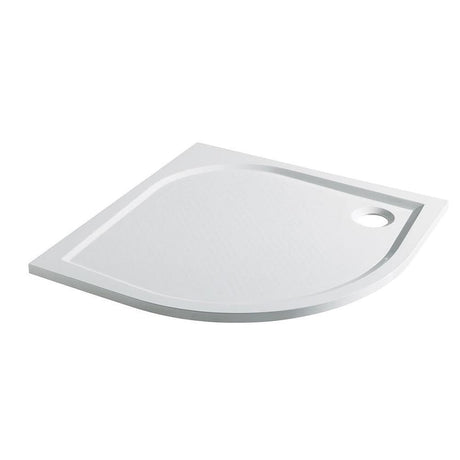
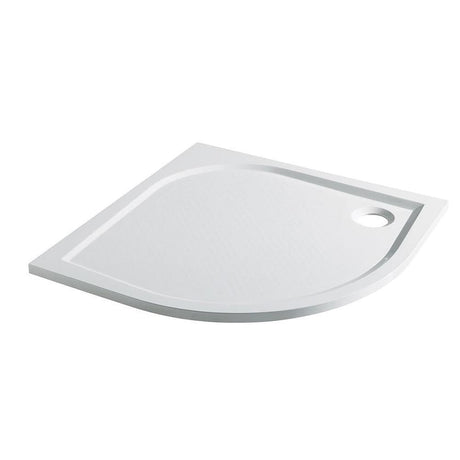
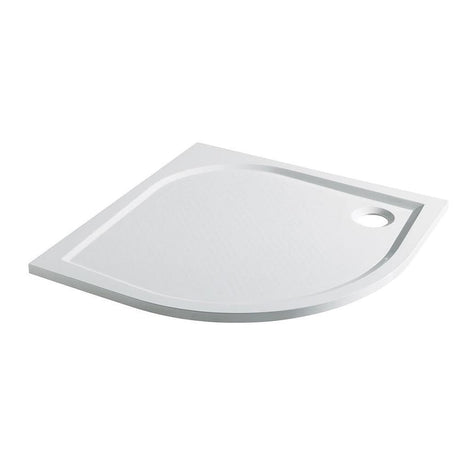
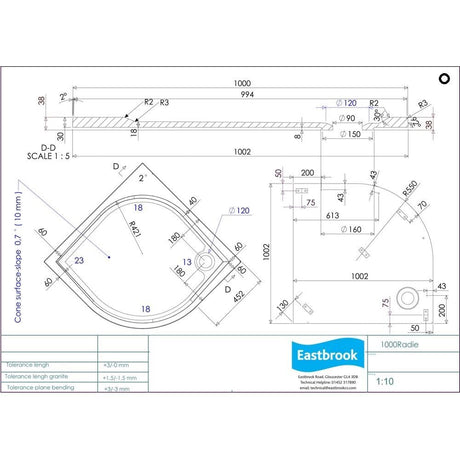
Eastbrook Vanguard Stone 25mm Quadrant Shower Tray


Aquarius Bathrooms
Aquarius Pluvia 45mm Stone Resin Quadrant Shower Tray


Aquarius Bathrooms
Aquarius Urbano Slimline 33mm Slate Effect Quadrant Stone Resin Shower Tray in Black Slate
Square and rectangular shower trays are probably the simplest to measure, as you're working with straight edges rather than a curved front. You'll still want to take a little care, though - especially if your walls have seen better days!
For a square tray, measure the distance available along each wall from the corner. Both measurements should be the same, for example 800 x 800mm or 900 x 900mm.
For a rectangular tray, measure the width and depth of the shower area. These can be different lengths, such as 1200 x 800mm or 1400 x 900mm, depending on the space you have available.
Take your measurements at floor level, as this is where the tray will sit. It's also worth measuring each wall in a couple of places to check for any differences. If one side measures 1200mm at one point and 1190mm at another, use the smaller measurement when working out which tray size will fit.
And remember! Take into consideration the finished wall dimensions and double check the tray's actual dimensions before ordering to avoid any hiccups in your bathroom renovation.


Aquarius Bathrooms
Aquarius Pluvia 45mm Stone Resin Square Shower Tray


Laufen
Laufen Marbond Pro S Rectangular Shower Tray with Waste in White


Roca
ROCA Terran-N Superslim Stonex® Square Shower Tray with Twist Colour Match Waste Cover


Laufen
Laufen Marbond Pro S Square Tray 900 x 900mm in White


Eastbrook
Eastbrook Vanguard Stone 25mm Square Shower Tray


Aquarius Bathrooms
Aquarius Urbano Rectangular Stone Resin Shower Tray with 4 Upstands


Aquarius Bathrooms
Aquarius Urbano Slimline 33mm Slate Effect Square Stone Resin Shower Tray in Black Slate
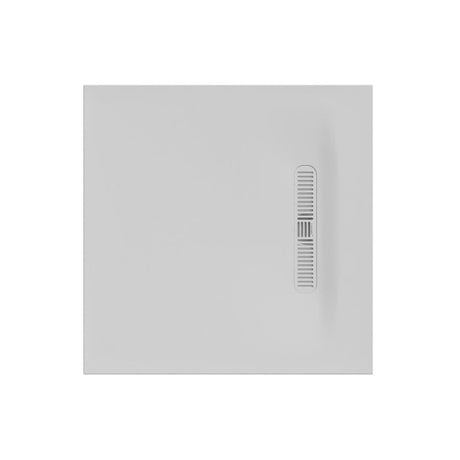
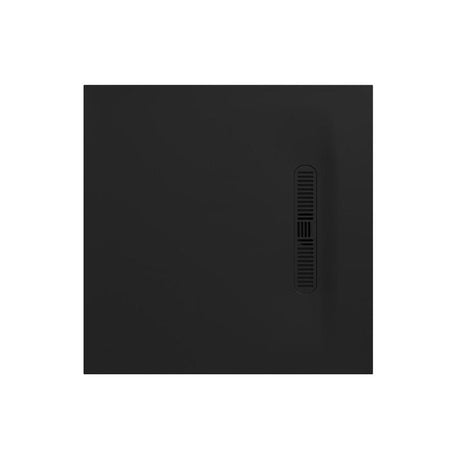
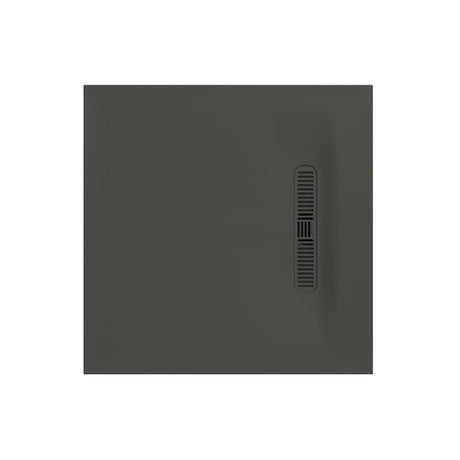
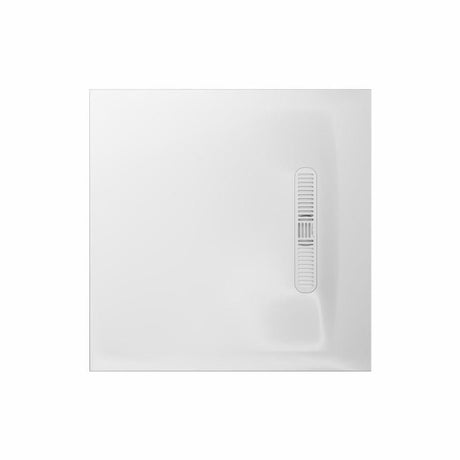
Crosswater
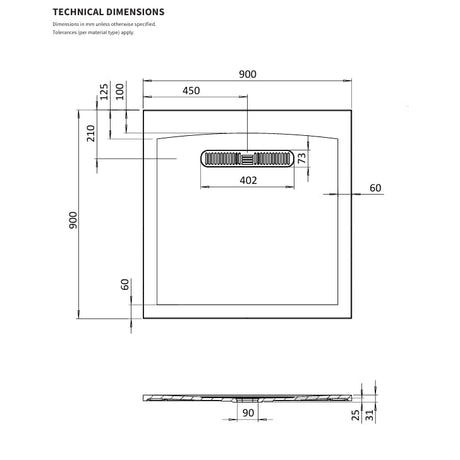
Crosswater Vito Square 25mm Stone Resin Shower Tray
Once you've worked out the space available for your tray, it's time to check your shower enclosure and tray are actually going to work together. This is an easy step to overlook, particularly when buying the two separately.
Start by checking the enclosures width and depth measurements against the tray you're considering. A 900 x 900mm shower enclosure, for example, will generall be designed to sit on a compatiable 900 x 900mm tray, but don't assume that the numbers alone tell the whole story.
Pay attention to the manufacturer's adjustment range too. Many shower enclosures can be adjusted by a few millimetres to account for the exact size of your opening and any slight imperfections in the walls. This is particularly useful if you're fitting a shower into an existing recess.
For quadrant and offset quadrant enclosures, also make sure the shape and handedness match the tray. An offset tray may be left or right handed, so check which side the longer section needs to be on before ordering.
It's also worth checking the enclosure's installation dimensions, rather than just looking at its advertised size. The stated size is usually a nominal dimension, while the actual fitting range tells you the minimum and maximum opening the enclosure is designed to fit.
If you're buying your tray and enclosure separately, check the manufacturer's compatibility information before ordering. Getting the measurements right is one thing - making sure the two products are designed to work together is the final piece of the puzzle.
Getting the tray size right is only half the job. You also need to think about where the shower waste is going to sit, particularly if you're replacing an existing tray and want to avoid moving the plumbing.
Take a look at where your existing waste pipe is positioned and compare it with the waste outlet on the new shower tray. Different tray designs can have the shower waste in different positions, so a tray that fits your space perfectly might still cause a headache if the waste doesn't line up.
If you're working with an existing waste pipe, look for a tray with an outlet position that works with the plumbing you already have. This can save you from having to lift more flooring or alter the pipework unnecessarily.
It's also a good idea to check the waste diameter and compatibility when choosing your shower waste. The tray itself may not always come with a waste included, so make sure you have everything you need before installation.
For a new shower installation, you have more flexibility because the waste position can be planned around the tray. Either way, it's much better to check this before ordering than discovering the problem when the tray is ready to go in.
Not every shower space will neatly match one of the standard tray sizes online. You might have an awkward recess, slightly uneven walls or simply find that the dimensions you've meausred sit somewhere between two tray sizes.
If you're close to a standard size, don't be tempted to assume that a slightly larger tray will fit. Instead, check the manufacturers's exact dimensions and adjustment requirements, and consider whether a different tray shape could make better use of the space.
For example, an offset quadrant tray can sometimes make better use of a wider but shallower area, while a rectangular tray can give you more flexibility in a longer shower space.
It's also worth considering the shower enclosure at the same time as the tray. You may find that changing the enclosure style gives you more options for making the most of an awkward space.

By now, you should have a much better idea of the space you're working with and the shower tray dimensions you need. Before ordering, double-check your measurements against the tray's product dimensions and make sure it's compatible with your shower enclosure and waste.
Still not quite sure which tray size is right for your space? Our team is always happy to help if you need a little extra guidance before placing your order. Feel free to contact us here for advice.
Once you've got those boxes ticked, all that's left is to find a tray that fits your space - and looks the part too.
